
My Gene Therapy Journey
This article was originally published in our Spring 2026 Bleeding Times Magazine. See the entire magazine by clicking here.
Author: James Wildman
Besides having Hemophilia B, I am the former administrator of three divisions of Hematology and Medical Oncology–two in New York and one in California. So, I had some insight on drug pricing and gene and immuno-therapies in other diseases, albeit from a financial point of view, as well as healthcare operations. This knowledge helped me navigate the challenging process of switching to gene therapy, myself.
A few years back, I received something in the mail about a new gene therapy product to treat hemophilia B, and I decided to do some more research on it. At the time, I was not working and was on a managed care Medicaid insurance plan. I thought this would be a good time to get this approved by insurance and get through the treatment before getting back to work.
The price tag for this new treatment was $3,500,000. From my insurance plan’s website, I pulled my orders of Factor IX and it took me roughly three years to use $3.5 million dollars’ worth of Factor IX–-proving this one-time cost would be a cost effective switch.
At the time, gene therapy was relatively new, so I knew making this change would be a big change in processes and procedures for the HTC. In September 2023, I told my doctor that I wanted to get the treatment, but I was met with resistance and delays and did not end up get it until October 2024. Thankfully, the manufacturer had patient navigators who stepped in and worked with my HTC to help make this switch possible. The navigator assigned to me was fantastic and essential for my getting this done and dealing with my HTC. I can’t thank her enough for supporting me and helping me get through this part of the experience.
Having hemophilia had defined me and my life in many ways. I wondered, would making this change in treatment change me as a person? Hemophilia is why I didn’t participate in many sports and why I could skip out on gym class growing up. Many people have attended camps and gone to meetings and seemingly endless events for every stage of life while living with their bleeding disorder. If tomorrow, you suddenly became “normal,” how would you fit in?
But, while I thought getting a gene therapy treatment would remove me from the bleeding disorders community, it actually connected me to the community and deepened my engagement. I am much more a part of this now than I ever was before. There has been an acceptance and welcoming that I had not anticipated and my involvement in the community is growing, as you can see by my writing here. It has been a testament to that sense of community that they have made room for me at this point in my life and so, I can understand the fear of not being a part of it, but I don’t think I am less a part of the community, if anything I am more because of the therapy.
As for the treatment itself, I have been maintaining factor levels at around 35-40%. I have had many “A Ha!” moments with this. I will knock into a door or something that used to require attention or would bruise up for several days and be in pain. Now, the same sort of common injuries have no bleeding or bruising at all. Flossing my teeth used to be a gruesome experience, but one day I was flossing and there was no bleeding.
It is the strange sensation of noticing something because it isn’t there. For me, the treatment is effective and produces the results it claims to. I had no side effects from the treatment and will have annual follow ups.
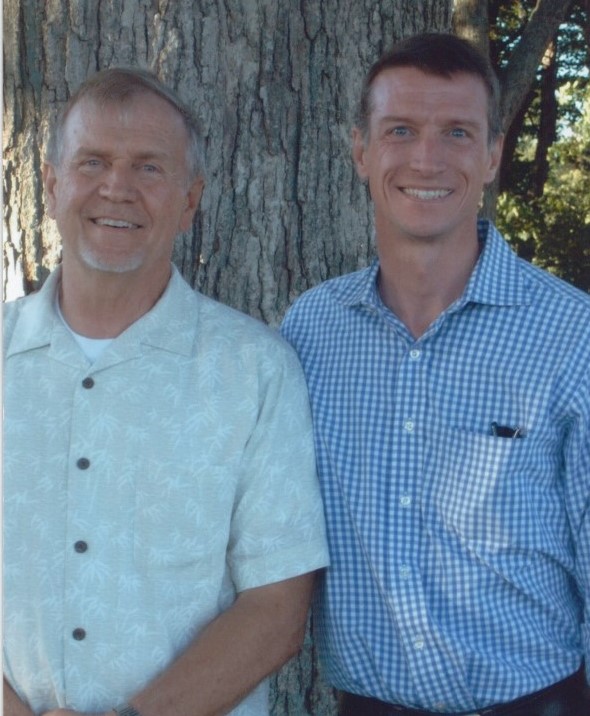
James (right) with his father, John (left).