From Advocacy to Action
This article was originally published in our Spring 2026 Bleeding Times Magazine. See the entire magazine by clicking here.
Author: Brandon Greene, Senior Manager, Marketing & Communications
Making decisions about your health can feel overwhelming. You may find yourself wondering: Is my current treatment still working for me? Is now the right time to consider a change? Which option is truly the best fit for my life? Am I being heard and understood by my care team? These questions are common, and you do not have to navigate them alone. Shared decision-making is designed to help you move through this process with clarity, confidence, and support.
According to the World Federation of Hemophilia (WFH), Shared Decision-Making (SDM) is a collaborative process in which you and your health care team make treatment decisions together. It combines the best available clinical evidence with your personal goals, preferences, and values to determine the approach that is right for you.
When practicing SDM, decisions are guided by thoughtful discussion around:
- Your life goals and how your bleeding disorder affects them
- The treatment options available to you
- Clear, balanced information about each therapy
- Emerging and future treatments currently being researched
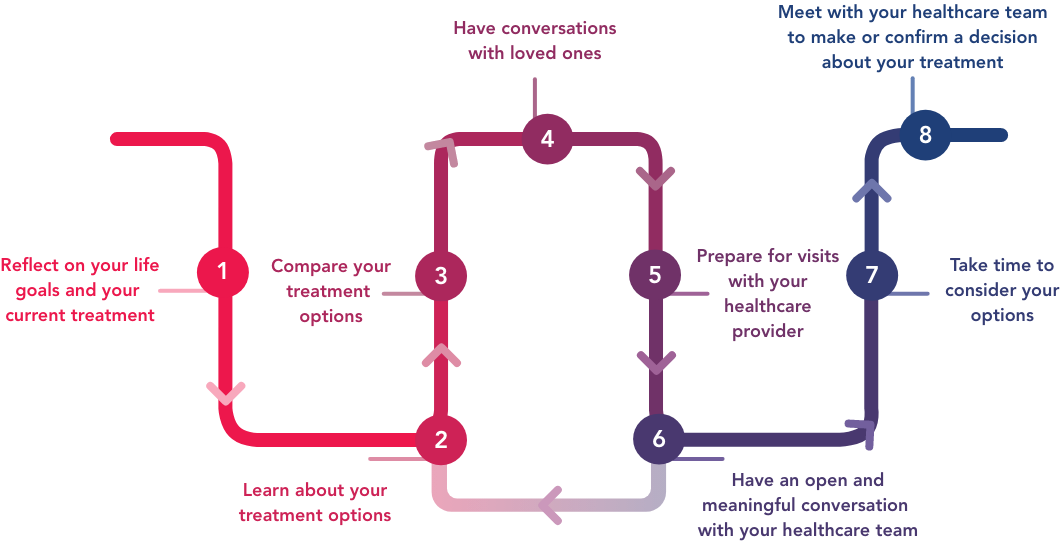
SDM is not a single conversation. It is an ongoing process that includes:
- Reflecting on your goals and current treatment plan
- Learning about available treatment options
- Comparing the benefits and considerations of each option
- Talking with family and trusted supporters
- Preparing for appointments with your health care providers
- Having open, meaningful conversations with your care team
- Taking time to consider your choices
- Meeting with your health care team to make or confirm a treatment decision
Nowadays, with the treatment landscape changing rapidly and new treatment options are emerging frequently, the World Federation of Hemophilia (WFH) has launched the WFH Shared Decision-Making Tool for people with hemophilia A or B and their caregivers.
- This interactive decision-support tool helps individuals identify their treatment goals, understand therapy options through balanced education, and navigate the complexities of current and emerging treatments in partnership with their health care team.
- One of the best parts about the WFH SDM Tool is that it is a “living” tool, meaning its data and information are updated with new evidence twice per calendar year. It is available in English, Dutch, French, German, Japanese, and Spanish.
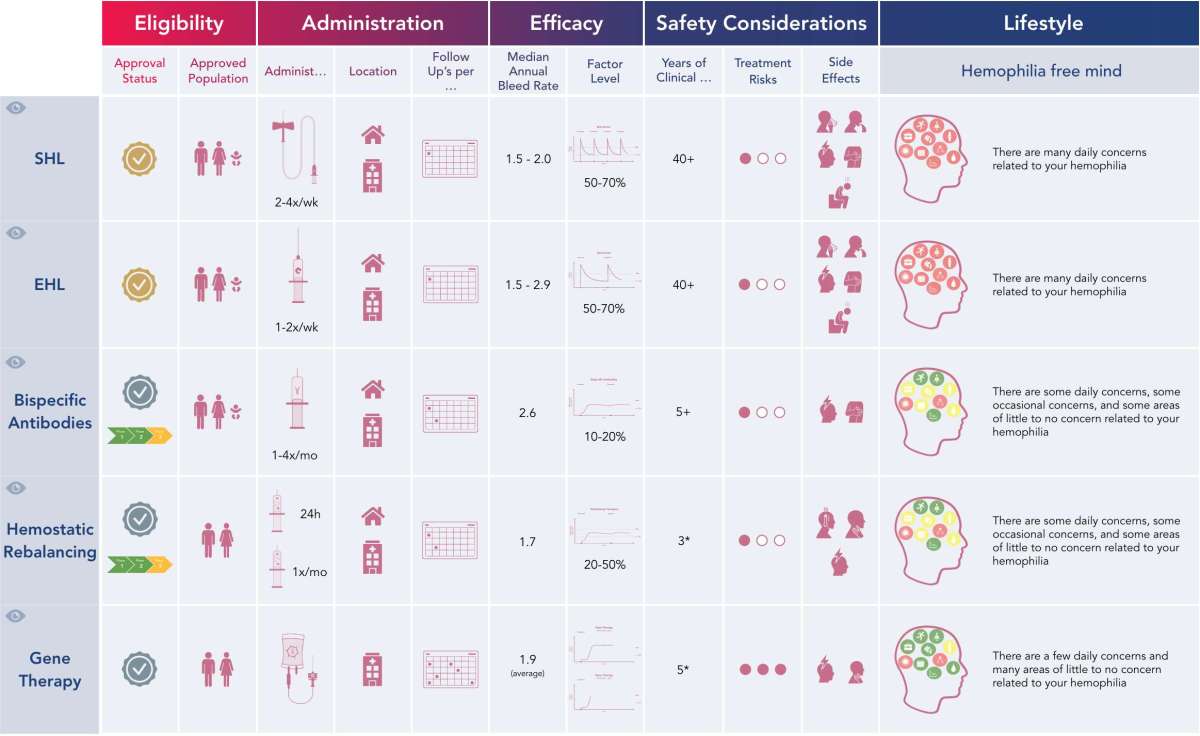
WFH also created a printable workbook for those who want to take a deeper dive into this process, along with an infographic comparing currently available treatment options.
Below is a simplified example of the shared decision making journey, produced by WFH.
WHF also created this infographic comparing currently available treatment options.